Why Dumbbells Make Sense After 55
If you are like me, you can make simple things way too complicated. Society teaches us that what worked 30 years ago somehow isn’t good enough anymore. We are constantly encouraged to buy bigger, newer, and fancier equipment.
I’ve fallen into that trap myself.
At one point, I had one of those giant workout machines sitting in my garage that promised to do everything. There’s nothing wrong with having nice equipment — I still own plenty myself — but when it comes to strength training for longevity and mobility, most of us really only need a simple set of dumbbells.
Why Strength Training Matters More After 55
It is important that we have strength training in our regular fitness routine. Men lose roughly 3-5% of muscle mass per decade after 30, accelerating after 60. Strength training slows the rate of muscle loss down – can even grow muscle to some extent.
It’s important to realize that strength training isn’t only for “strength” in the sense of being able to lift or move things. Strength training also helps with our balance and stability and it helps protect our joints.
As you know, at our age, one bad fall or injury can completely change the way we live. That’s why maintaining strength, balance, and mobility matters so much more now than it did at 25. We aren’t doing it to look good in the two sizes too small t-shirts. We do it so that we can play catch with our grandkids, or go for a walk around the block, or play a round of golf on Saturday.
The Only Dumbbell Equipment You Really Need
Just like everything else, even something as simple as dumbbells offers a wide array of options. I’ve got a couple of suggestions for you, depending on your goals and workout intentions.
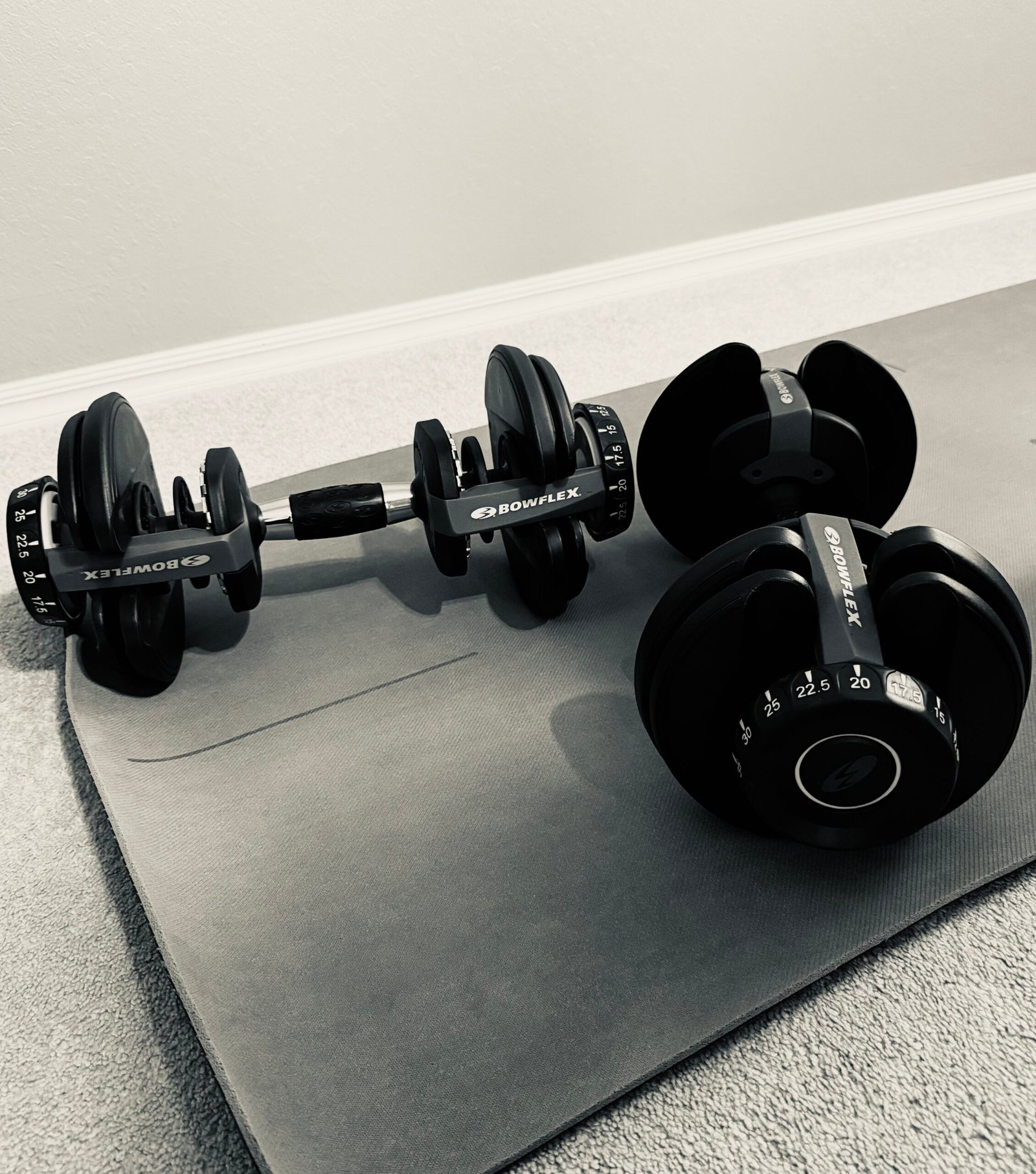
Some of you may be content with a simple 10 lb dumbbell set. With 10 lbs, you can find all sorts of exercises that you can use to work all areas of the body. If this is the route to go, I’d suggest these right here – https://amzn.to/4dqNyUO . Nothing fancy at all about them, but I like the neoprene coating, and they just “feel” good.
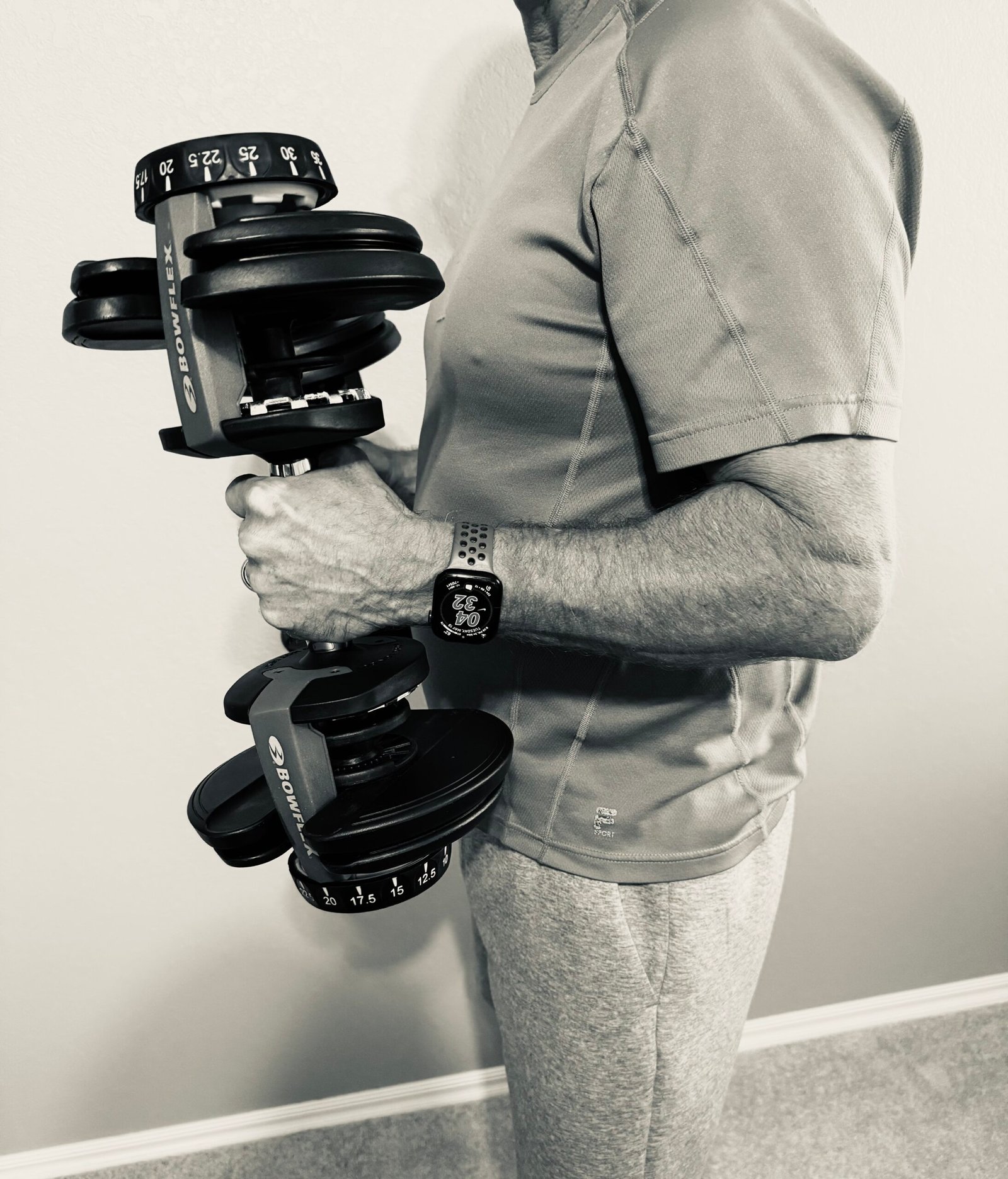
If you are a little further along in your fitness journey, or you have some more serious strength training plans, I’d suggest an adjustable weight dumbbell set. These are the ones I use (https://amzn.to/3RFWLBd). One shopping note – if you purchase dumbbells, make sure you are getting a set of two. Particularly on the heavy adjustable weight dumbbells, they like to sell one at a time.
If You Want Just A Little Extra
One last thing you might pursue once you are comfortable using dumbbells and are ready to step up your workouts, is an adjustable bench, like this (https://amzn.to/3PsyNZs). If you go this route, get something simple. Don’t break the budget on a bench. These will allow you to do more exercises and hit muscles from different angles. You do not have to have a bench. This is just for those of you who like to have a little “extra”.
Simple Warm-Up Before Lifting
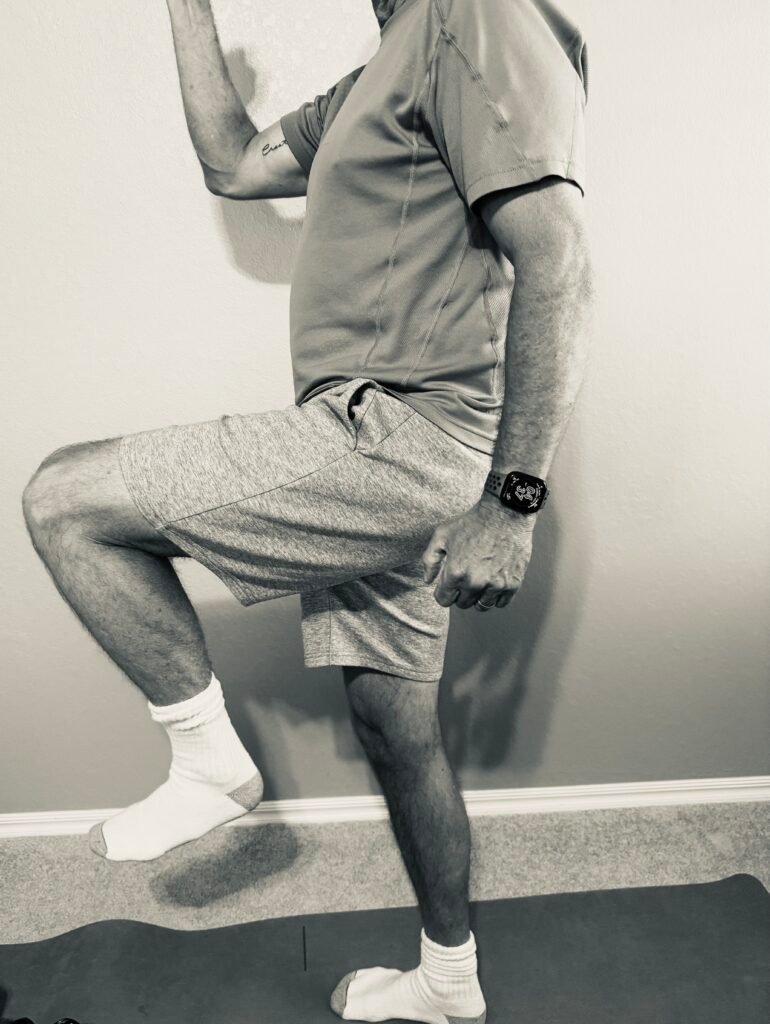
Never start working out without warming up first. There is nothing magic to this, you just need to move your body and get it warmed up before you start lifting weights – even if they are light weights. Spend a few minutes mixing in a few of the following moves, and you will be warm and ready to go.
- arm circles
- bodyweight squats
- marching in place
- shoulder rolls
- light stretching
A Simple Workout Routine For Men Over 55
Always remember, I am not a certified trainer. This is just a sampling of what I have seen work for me.
I would suggest doing 3 sets of 8 to 10 repetitions for each exercise, with a minute of rest between each set. Once you can complete the set with ease, increase the weight.
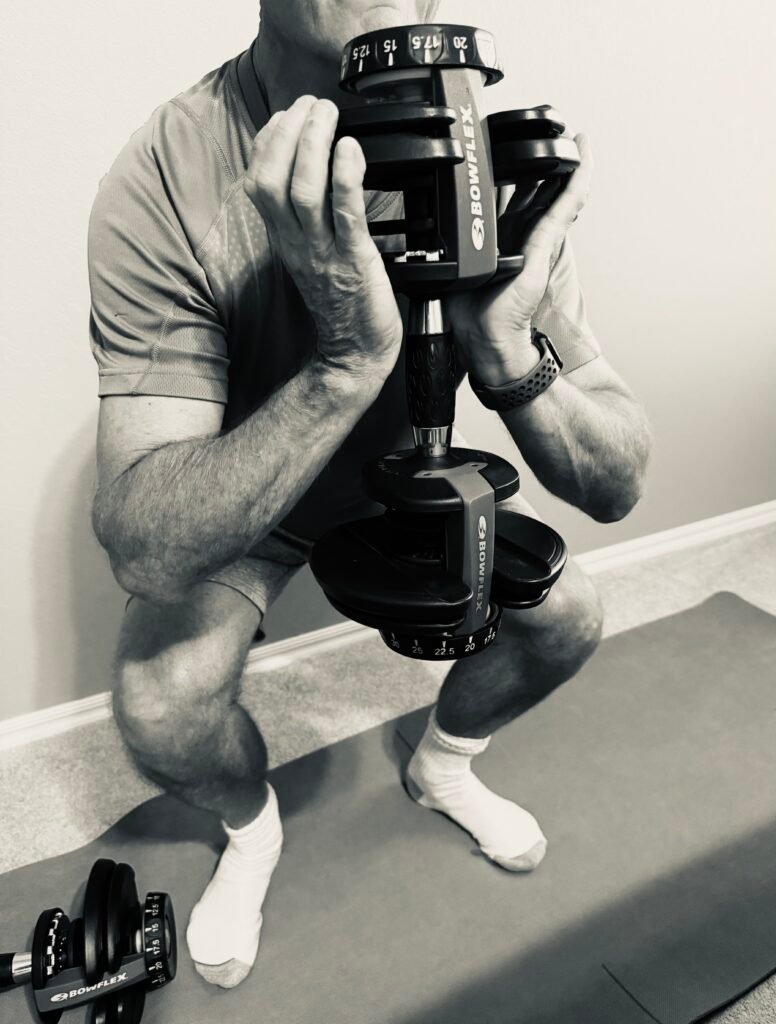
Goblet Squat –
Holding a dumbbell at your chest while squatting helps strengthen your legs, hips, and core while improving balance and mobility. Don’t worry if you can only squat halfway down at first — that’s completely normal and still effective — depth will improve over time as your hips loosen up.
Dumbbell Chest Press –
Pressing dumbbells upward from a bench or floor builds chest, shoulder, and arm strength with a natural range of motion. If you don’t have a bench, the floor works just fine. Actually, the floor limits how far your arms drop, which can be easier on older shoulders.
One-Arm Dumbbell Row –
Pulling a dumbbell toward your torso strengthens your upper back and helps improve posture and stability. This one is great for counteracting the hunched-over posture that creeps up on most of us after years of desk work or driving. You’ll likely notice the postural benefit pretty quickly.
Shoulder Press –
Pressing dumbbells overhead develops shoulder strength and supports everyday movements like lifting and reaching. Start lighter than you think you need to here — shoulders are more vulnerable than most people realize. If pressing straight overhead causes any discomfort, try angling the dumbbells slightly forward. That small tweak makes a big difference.
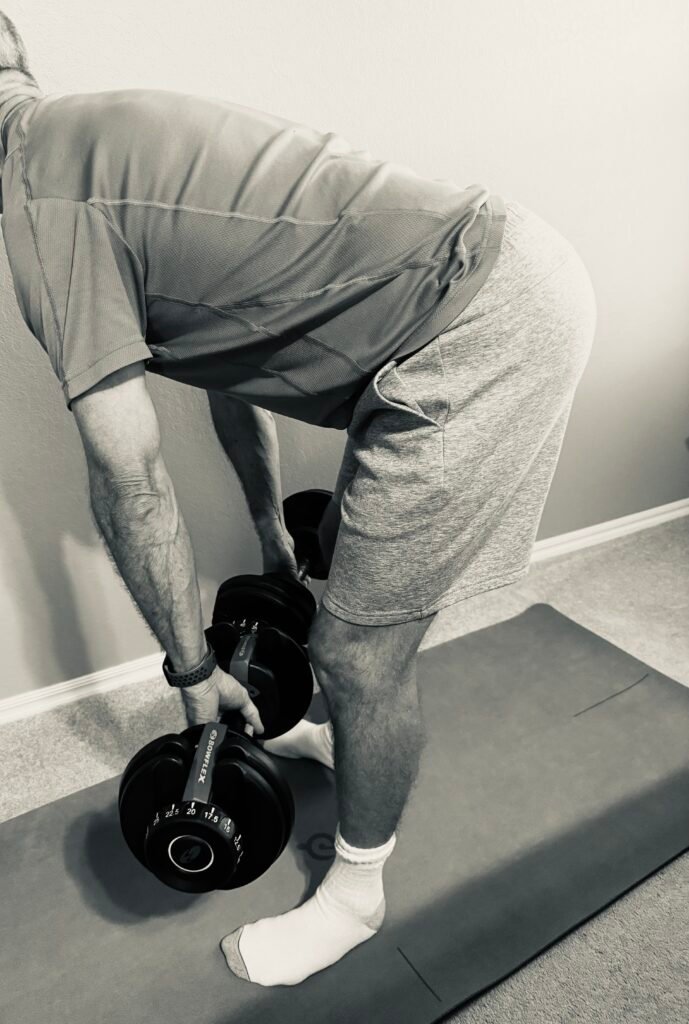
Romanian Deadlift –
Lowering dumbbells along your legs with a slight knee bend strengthens the hamstrings, glutes, and lower back. Don’t stress about getting the dumbbells all the way to the floor. Lower them until you feel a good stretch in the back of your legs, then come back up. That’s all you need.
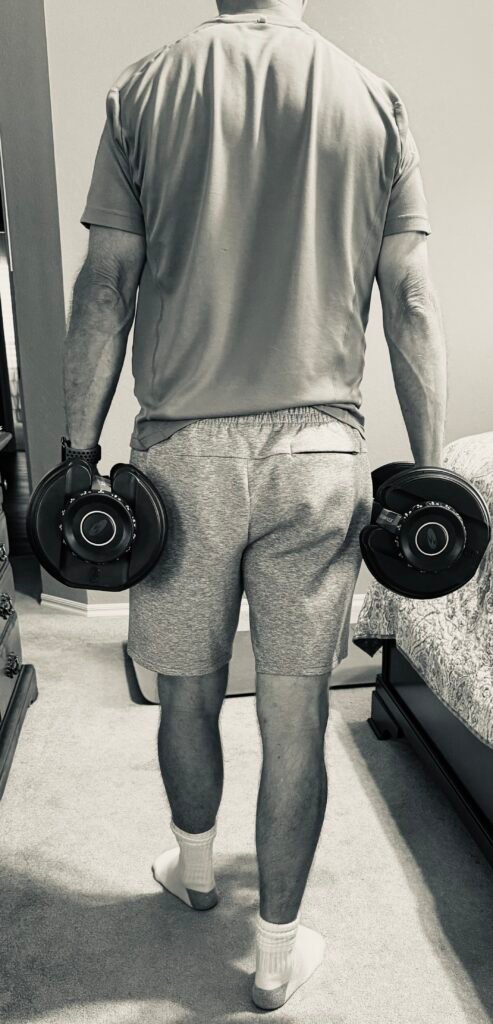
Farmer Carries –
Walking while holding heavy dumbbells at your sides builds grip strength, core stability, and overall functional fitness. This one sounds almost too simple to be worth doing, but don’t be fooled — it’s one of the most functional exercises on the list. If you’ve ever carried groceries in from the car, you already know exactly why.
If you’d like another workout routine or advice on very basic home workout equipment, visit my previous post – The Simple Home Gym Setup For Men Over 50 (No Membership Required)
How Much Weight Should You Use?
I suggested earlier to increase the weight for an exercise once you can complete all 3 sets fairly comfortably. But what do you start with? Take it from me, start with lighter weights than you think. When you are lifting, focus on controlling the weight as opposed to slinging it up and down.
The Biggest Dumbbell Workout Mistakes
It does us absolutely no good to start a workout routine and injure ourselves right off the bat. It’s far better to check your ego and progress slowly. And remember, we aren’t going after the magazine covers. We are just wanting to be able to move around and do all of the fun things we have in mind for our 70’s, 80’s, and even our 90’s.
Be consistent. If you workout once a month, you probably won’t get a lot of benefit out of it. Try to do some sort of strength work at least two times per week.
Again, don’t try to do too much. Remember our goal. You are far better off lifting light weights and completing your workout than you are trying to lift heavy and causing yourself an injury.
Don’t train if you are injured. You know the difference between soreness and injury. If your muscles are sore, it’s one thing, but if you are truly injured – sharp pain, joints hurt, limited mobility, etc., take time off and get treated.
My Personal Approach To Dumbbell Training
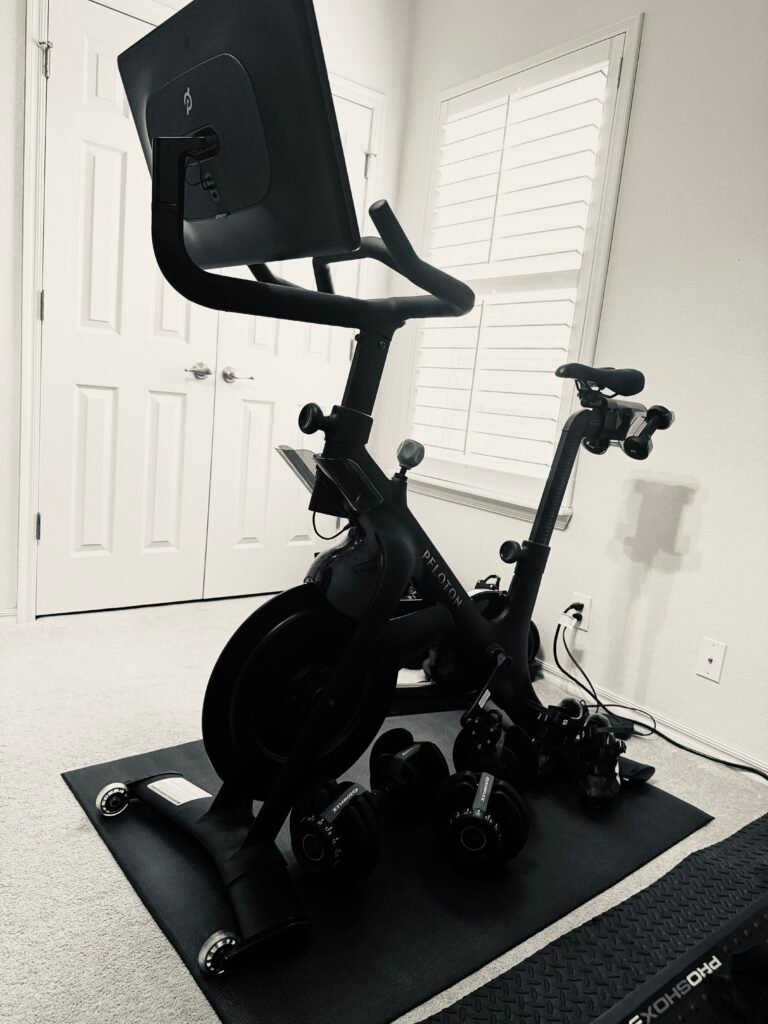
I try to get in three weight training routines per week. Honestly, it doesn’t happen very often. I would say on average, I get about two strength workouts in. If you want me to be really honest, I don’t like lifting weights. I much prefer cardio. However, I know the benefits of maintaining muscle mass, so I force myself to do it.
Lately my workout of choice is doing a 20 minute Strength class on the Peloton App. Even with this, I may take a set or two off and recover. I make myself remember my goal. I’m not after herculean strength. I just want to keep living an active life for the next 30 years or so.
Final Thoughts
At this stage of life, fitness isn’t about impressing anybody. It’s about staying healthy enough to enjoy life, remain independent, and continue doing the things we love for as long as possible.
And for most of us, a simple pair of dumbbells can help accomplish exactly that.
This post contains affiliate links. If you purchase through my links, I may earn a small commission at no cost to you.
Related Posts: