

Avoid these common fitness mistakes so you can stay strong, active, and injury-free as you age.
I’m nearing 60, and if you’re in the same neighborhood, chances are you think you already know what you’re doing when it comes to exercise.
Trust me — most of us don’t.
When men over 50 decide to get back into shape, we often make the same predictable mistakes. The good news is that most of them are easy to avoid once you recognize them.
Mistake #1: Doing Too Much Too Soon
It seems like only yesterday we were running 5K’s, bench pressing our weight, playing hoops for hours, or booming 300 yard drives (okay, maybe only 250 yard drives for me – but you get the point).
We decide to get back in shape or get in better shape and we think we can pick up where we were 30 years ago. It sucks, but our bodies aren’t ready for that. We take off on a Saturday morning run remembering how freely we used to move. We go to the gym and stack on plates thinking we can pick up right where we left off. Maybe we tee off thinking we are John Daly.
Doing too much too soon can be devastating. We can injure ourselves, or even worse, embarrass ourselves and it may cause soreness the next day (or week).
If this happens, then it’s just not enjoyable, and if it’s not enjoyable, chances are we will give up on improving ourselves before we even get started.
Mistake #2: Skipping Strength Training

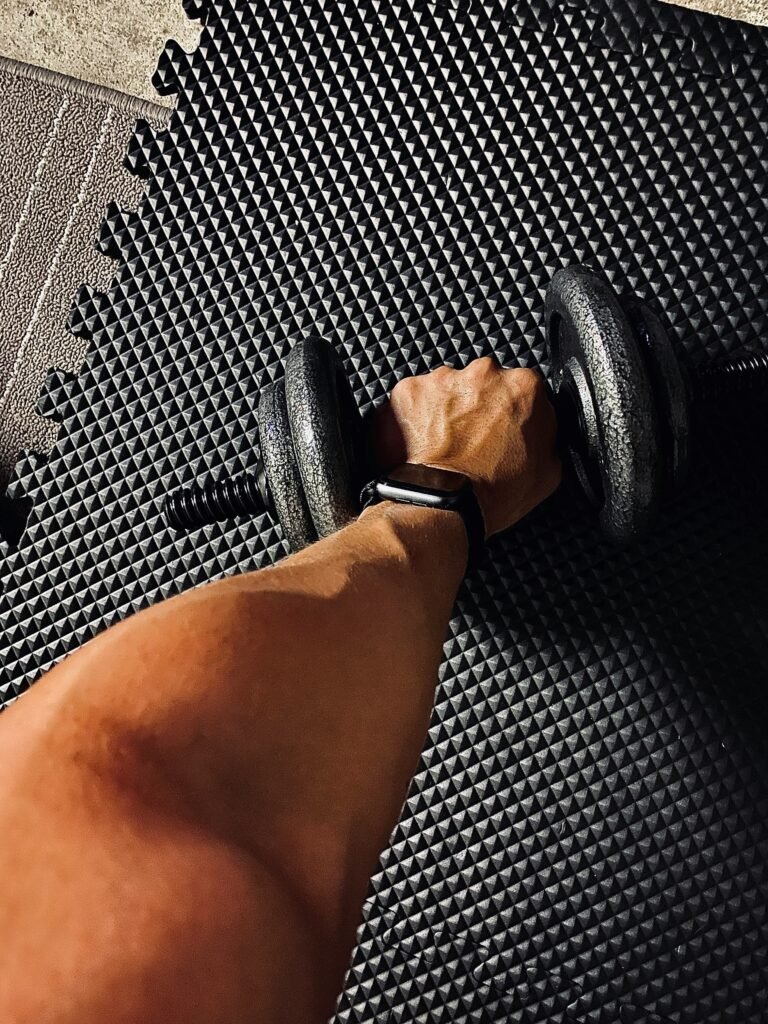
We will assume that you ease into your new lifestyle of fitness and health. Don’t get caught up in the trap of being “cardio only”. We have to also strength train at least once a week, preferably two or three times a week. I get it, strength training feels like actual work; but it’s work that has to be done.
It’s easy to convince ourselves to skip it. The weight room can be an intimidating place. People look like they know what they are doing. The machines seem complicated to figure out. We may not be sure about the etiquette of ‘who’s got next” on the leg press or with the 40 lb dumbbells. Once we convince ourselves that we belong there, we may be unsure of what body parts to work out. How many reps? How much weight.
As you know by now, I try to keep it very simple. Just commit to doing “something” strength related a couple of times per week. Lift something, push something, pull something.
- pushing (push-ups or chest press)
- pulling (rows or pull-downs)
- legs (squats or leg press)
Make sure it takes a little bit of work. You don’t have to give yourself a hernia. Move it until you feel like your muscles are tired. Rest a minute, then do it again. Don’t overcomplicate this. Just get in the gym or grab your dumbbells at home and move around.
Mistake #3: Not Warming Up
Especially as we get older, failing to warm up is a recipe for injury. Whether it’s cardio, strength training, or even stretching, we must spend a few minutes warming up and preparing our body for movement.
We may think that warming up is a waste of time. If we are devoting 30 minutes to working out, we may feel like five minutes spent warming up is a waste of time. We may think that warming up is not necessary. If we are doing a simple fitness routine, we may think that we don’t need to warm up. When we are starting our workout, we usually feel good, so we may convince ourselves to skip the warm-up.
Now that you know that a warm-up is necessary, don’t overcomplicate it. Just move around a little bit, get your heart rate up. Three minutes of a quick walk or jog is great. A quick spin on the bike will work. Touch your toes (or knees), swing your arms around. Do anything for two to three minutes that gets your heart pumping. Then you are ready for your workout.
Mistake #4: Being Inconsistent
When we start a new routine, we are usually fired up and excited about how we are going to look and feel different. We are “all in” for a few days, but invariably something comes up and throws us off of our routine. Often, because we didn’t heed the advice mentioned earlier, we are sore and don’t feel like working out. We may take the day off from fitness. I’m not at all saying skipping a day is bad. Just don’t let that become a new habit.
Sometimes we set unrealistic goals and if we don’t see the six-pack popping out in two weeks we get frustrated. We may be so gung-ho that we make our workouts too long and they are not enjoyable, making it easier to justify skipping. Whatever your routine of choice may be, my advice is to choose something that is actually enjoyable, or at least figure out a way to make something seem enjoyable. When strength training, shake up your routine. Do things in a different order, do light weights and heavy reps – anything to make it not boring.
Don’t get too caught up in the fact that you have to do a specific workout, or exercise for a certain amount of minutes each day. As you will hear me say over and over – “just move”. If you don’t feel like a formal workout, that’s okay, don’t do one. However, if you skip your workout, make sure you move in other ways. Park farther out in the parking lot. Take the long way to the break room at the office. Every little bit helps.
Mistake #5: Ignoring Mobility and Flexibility

This one hits close to home for me. I’ve been fairly active for my entire life. However, it seems that all of a sudden at the age of 58, I’ve lost my flexibility. As we age, mobility and flexibility become even more important. The less agile we are, the more likely we are to fall. Once you are our age, a fall is a very dicey thing. Our bones are more brittle, and all it takes is one broken hip at age 60 and our entire lifestyle can change.
Several things lead to lack of mobility and flexibility. One of the biggest reasons is age related muscle loss (Sarcopenia). This is why strength training is so important. We lose 3-8% of muscle mass per decade after 30. Our tendons and ligaments also stiffen as we age. The result is stiffer joints and reduced flexibility, especially in the hips, hamstrings, and shoulders.
The best way for people our age to stay ahead of this is to do strength training, mobility exercises, and stretching. Hopefully if you are doing a workout, you will incorporate some sort of flexibility or mobility exercise into your warm-up. See above. You can also mix this stuff in to your daily life. Do 10 squats while the coffee is brewing. Do a light stretch while watching your latest Netflix binge. Swivel your hips while you brush your teeth.
Mistake #6: Comparing Yourself To Younger Athletes
Many of us are pretty delusional with our self-talk. We see the 25 year old man out doing what 25 year old men do and we assume we can jump off of the couch and match him step for step (or rep for rep). Easy there big fella, we have a lot of miles on our bodies and we don’t handle quite the way we used to.
When we exercise like we are 25 we are much more prone to overtraining, which often leads to discouragement or injury. Once we get discouraged or injured, we are much more likely to give up on our new fitness routines. The name of the game isn’t being in the best shape of our life, it is being fit enough to move around and enjoy our later years. We want action and vitality. We don’t want couches and television.
Professional golf has a great league – the Senior PGA Tour. These guys are 50 and above. They know that they can’t compete with the 25 year olds. Yes, on occasion, they can, but not on a consistent basis. We should have the same outlook on our own fitness life. Let’s focus on us in our current state of life, not what we used to be.
Mistake #7: Not Listening To Their Body
Our bodies are talking to us constantly. We have to be smart enough to listen to it. The purpose of pain is to tell us that our bodies are damaged in some way. Always listen when your body is in pain. Discomfort is a different animal. Discomfort is tiredness, general stiffness, and is improved by slight movement. Pain is sharp and sudden. It is usually localized to a specific spot. Some discomfort is part of getting stronger. Pain, however, is your body asking you to pay attention.
This goes back to guys in their 50’s being hard headed. We remember the saying “No Pain, No Gain.” We are making progress in our fitness life and if pain hits us, we feel like we have to push through it. As I’ve alluded to before, our goals are longevity and vitality. We are not competing against our 30 year old selves. We are preparing for our 80 year old selves. When you have pain, see your doctor.
When your muscles are a little tight or a little sore, put them through a range of motion and see if the discomfort subsides. When your joints are in pain or you feel a sharp pain anywhere, it’s time to get checked out. Don’t make an injury even worse.
Conclusion
The good news is that avoiding these mistakes isn’t complicated. Start slowly, stay consistent, and listen to your body.
Fitness after 50 isn’t about proving something to anyone else. It’s about staying strong, active, and capable so we can enjoy the years ahead
If you’re wondering what a simple weekly routine might look like, check out my post on A Simple Weekly Workout Routine for Men Over 55.